
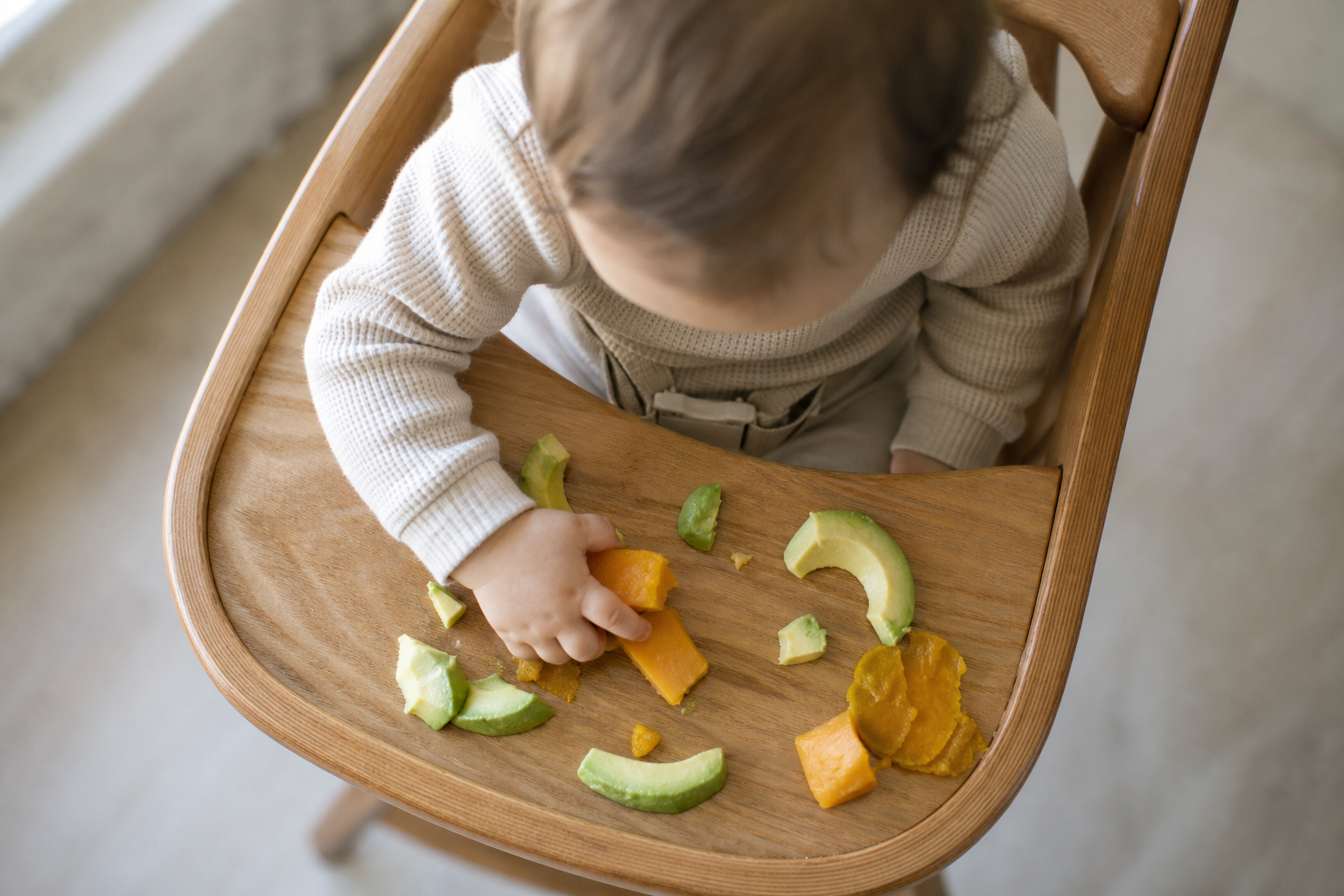
If you've spent an evening scrolling "superfood" lists for infants, you already know the frustrating truth: every site names a different winner. Sweet potato, avocado, oatmeal, salmon, blueberries, they all show up somewhere. So what is the healthiest food for a baby, really, and does the answer change depending on age, culture, or whether you're feeding a boy or a girl?
The honest answer is that no single food carries a baby through infancy. What matters is a small set of nutrients (iron, zinc, choline, healthy fats) that a baby's rapidly growing brain and blood supply need starting around 6 months, delivered in a form the baby can actually eat safely. This guide covers the specifics: what to serve daily, by month, by feeding method, and what the research says about questions most infant-feeding pages skip entirely, like early allergen introduction and whether nutrient needs differ for baby boys.
What Is a Superfood for Babies?
"Superfood" isn't a clinical or regulatory term, it's a marketing label applied to any food unusually dense in one or more nutrients. For babies, that shorthand is useful only if it points to the nutrients that are actually in short supply during infancy: iron, zinc, choline, iodine, and DHA (an omega-3 fat used in brain tissue).
By that definition, the foods worth prioritizing are pureed meat and poultry (iron, zinc, choline), egg yolk (choline, DHA, iodine), lentils and beans (iron, fiber, plant protein), and avocado (healthy monounsaturated fat with a fat profile that resembles breast milk, according to nutrient-composition research on avocado). Fruit and colorful vegetables matter for fiber and vitamin C, which helps the body absorb iron from plant sources, but they aren't where the nutrient gap actually is for most infants in high-income countries.
A Baby's Daily Diet by Age
Daily structure changes fast between 6 and 12 months, and portion confusion is one of the most common reasons parents underfeed or overfeed solids. The table below reflects feeding volumes described by the CDC's infant feeding guidance.
| Age | Milk feeds | Solid meals/day | Texture | Approx. solid volume per meal |
|---|---|---|---|---|
| 6 months | Breast milk or formula on demand, roughly 24-32 oz/day | 1-2 | Thin, smooth puree | 1-4 tablespoons |
| 7-9 months | 24-32 oz/day | 2-3 | Mashed, soft lumps, soft finger foods | 4-8 tablespoons |
| 10-12 months | 16-24 oz/day | 3 meals + 1-2 snacks | Chopped, hard finger foods | Up to 3/4 to 1 cup |
These are averages, not targets to hit at every meal. A baby who eats two tablespoons at lunch and refuses dinner is still likely getting enough over a full day.
What Should a 6-Month-Old Eat First?
A 6-month-old should start with a food that delivers iron, since a full-term baby's birth iron stores begin running low around this age. Iron-fortified infant cereal, pureed meat, or mashed lentils and beans are better first choices than fruit or vegetables alone, because babies absorb iron from meat (heme iron) far more efficiently than from cereal (non-heme iron).
One meal a day is enough to start. A realistic first-week menu looks like: 2-3 tablespoons of pureed chicken or beef thigh mixed with a splash of breast milk or water to thin it, offered once daily, alongside continued milk feeds on demand. New single-ingredient foods are typically introduced one at a time, three to five days apart, to watch for reactions.
Best Foods for Babies 6-12 Months
The nutrients that matter most in this window rarely get top billing on generic "best foods" lists. The table below maps the actual gap: what a baby's body needs, and which foods close it.
| Nutrient | Why it matters at this age | Top food sources |
|---|---|---|
| Iron | Birth stores deplete by ~6 months; deficiency risks cognitive delay | Pureed meat, poultry, fortified cereal, lentils, beans |
| Zinc | Growth, wound healing, immune function | Meat, poultry, dairy, beans |
| Choline | Brain and memory development | Egg yolk, meat, salmon |
| Iodine | Thyroid hormone production, brain development | Dairy, fish, iodized salt used in cooking |
| DHA / healthy fats | Brain and eye tissue growth | Avocado, salmon, egg yolk, full-fat yogurt |
| Vitamin C | Boosts absorption of plant-based iron | Citrus, strawberries, bell pepper, broccoli |
Choline and iodine are worth calling out specifically because choline intake data and iodine surveys both suggest many infant diets fall short unless egg yolk, meat, or dairy appear daily.
Which Fruit Is Best for Babies?
No single fruit is objectively "best," but banana, avocado (botanically a fruit), and prunes stand out for different reasons. Banana offers potassium, vitamin B6, and easy texture for early spoon-feeding. Avocado supplies fat that supports brain growth. Prunes contain sorbitol and fiber that help with the constipation common when solids are introduced.
Blueberries and berries generally add antioxidant flavonoids but should be mashed or quartered until a baby has a solid pincer grasp, since whole berries are a choking hazard for infants under 12 months. Citrus fruit is fine from 6 months for most babies and doubles as a vitamin C source that helps the body absorb iron from a meat or lentil puree served at the same meal.
What Is the Healthiest Food for a Baby in the World?
There is no global "best food," and that's actually the point: the healthiest infant diets worldwide look different by country but follow the same underlying rule. The World Health Organization's complementary feeding guidance states that first foods should be locally available, energy-dense, and combined with an animal-source food or legume to meet iron and zinc needs, whatever the staple grain happens to be.
In Japan, that staple is okayu, a soft rice porridge, often paired with fish or tofu. In much of South Asia, it's dal (lentil puree) with rice or ragi (finger millet) porridge. In parts of West Africa, it's mashed cassava or plantain with groundnut paste. None of these outrank each other nutritionally when they're paired correctly with an iron and protein source; they simply reflect what's regionally available. The takeaway for a parent shopping in any grocery store is that the specific grain or root vegetable matters less than making sure iron, zinc, and fat show up on the plate.
Is the Healthiest Food Different for a Baby Boy?
No, nutrient needs in the first year of life do not differ by sex. The NIH's Dietary Reference Intake tables list identical iron, zinc, and protein requirements for infants 0-6 months and 7-12 months regardless of whether the baby is male or female; sex-based differences in nutrient recommendations don't appear in the data until later childhood and adolescence.
Searches for "healthiest food for a baby boy" are common, but they're driven by parental curiosity rather than any biological difference in early infancy. The one variable that genuinely affects how much a baby eats is body size and growth rate, which the pediatrician tracks via growth charts, not sex alone. A larger, faster-growing infant of either sex may simply need slightly more volume at each meal.
Baby-Led Weaning: What Counts as the Healthiest Food?
Baby-led weaning (BLW) skips purees and lets the baby self-feed whole, soft pieces of food from the start of solids, usually around 6 months. A 2012 review of the evidence on baby-led weaning found no clear nutritional disadvantage compared with spoon-feeding, provided the foods offered still hit the same iron and zinc targets, since BLW makes it easy to accidentally skip iron-dense foods in favor of things a baby can pick up more easily, like banana or bread.
The practical fix is shape, not ingredient choice. Cut iron-rich foods into pieces a baby can grip and gum: a slow-cooked strip of beef about the width of an adult thumb and 2-3 inches long, a soft lentil-and-vegetable patty, or a wedge of hard-boiled egg. Gagging (loud, coughing, food moving forward) is a normal, protective reflex in BLW and different from choking (silent, no sound), which needs immediate action.
When Should Babies Try Peanut and Egg?
Most babies should try peanut-containing food and well-cooked egg around 6 months, alongside other first foods, not after a long delay. This reverses guidance from a decade ago and is one of the most consequential updates in infant feeding that many general "best foods" lists still don't mention.
The shift followed the LEAP trial, published in the New England Journal of Medicine in 2015, which found that infants at high risk for peanut allergy (those with severe eczema or existing egg allergy) who ate peanut protein regularly from 4-11 months had a roughly 70-86% lower rate of peanut allergy by age 5 compared with infants who avoided it. Based on this and supporting evidence, the NIAID-sponsored 2017 guidelines recommend introducing peanut as early as 4-6 months for high-risk infants (after checking with a pediatrician, sometimes with in-office testing first), and around 6 months for everyone else, with no medical reason to delay. In practice that means thinning smooth peanut butter with warm water or breast milk into a puree, never offering whole peanuts or spoonfuls of peanut butter, which are choking hazards.
What Foods Should Babies Avoid in the First Year?
A short list of foods carries specific, well-documented risks before 12 months. Honey can contain Clostridium botulinum spores that an infant's gut cannot yet neutralize, risking infant botulism. Cow's milk as a main drink (not yogurt or cheese) before 12 months has been linked to intestinal blood loss and displaces the iron a baby needs. Unpasteurized dairy, added salt, added sugar, and plant-based milks like soy, rice, or almond milk as a primary drink are also discouraged in the first year because they don't match breast milk or formula's nutrient profile.
Choking hazards deserve equal attention: whole grapes, whole nuts, popcorn, chunks of raw hard vegetable, hot dog rounds, and hard candy should be avoided or modified (halved, quartered, cooked soft) well past the first birthday, per CDC choking-hazard guidance.
Frequently asked questions
What is the single best first food for a baby?
There isn't one universal best first food, but iron-rich options like pureed meat, iron-fortified infant cereal, or mashed lentils are stronger choices than starting with fruit alone, since a baby's iron stores from birth begin to run low around 6 months.
How much should a 6-month-old eat each day?
About 1 to 4 tablespoons of solid food per meal, once or twice a day, is typical for a 6-month-old just starting solids, alongside continued breast milk or formula feeding on demand, per CDC feeding guidance.
Is oatmeal or rice cereal healthier for a baby?
Iron-fortified versions of either can work as a starter food, but plain rice cereal alone provides little beyond fortified iron, so pairing it with pureed meat, egg yolk, or lentils gives a more complete nutrient mix.
Do baby boys need more calories or different foods than baby girls?
No. Dietary Reference Intake data from the NIH show identical calorie, iron, zinc, and protein recommendations for infants regardless of sex during the first year; differences appear later in childhood, not infancy.
Can babies eat peanut butter before their first birthday?
Yes, thinned peanut butter or peanut puree is now recommended around 6 months for most babies, and as early as 4 months for high-risk infants after a pediatric check, based on the LEAP trial and NIAID's 2017 guidelines. Whole peanuts or thick spoonfuls of peanut butter should never be given due to choking risk.
What fruits should be avoided for babies?
No fruit is off-limits after 6 months, but whole grapes, cherries, and whole berries need to be cut or mashed until a baby has a reliable pincer grasp, since they are common choking hazards in their whole form.
Sources
- Infant and Young Child Feeding (2023)
- How Much and How Often to Feed (2023)
- Choking Hazards (2023)
- Randomized Trial of Peanut Consumption in Infants at Risk for Peanut Allergy (LEAP) (2015)
- Addendum Guidelines for the Prevention of Peanut Allergy (2017)
- Iron: Fact Sheet for Health Professionals (2022)
- Choline: Fact Sheet for Health Professionals (2022)
- How Feasible Is Baby-Led Weaning as an Approach to Infant Feeding? A Review of the Evidence (2012)