
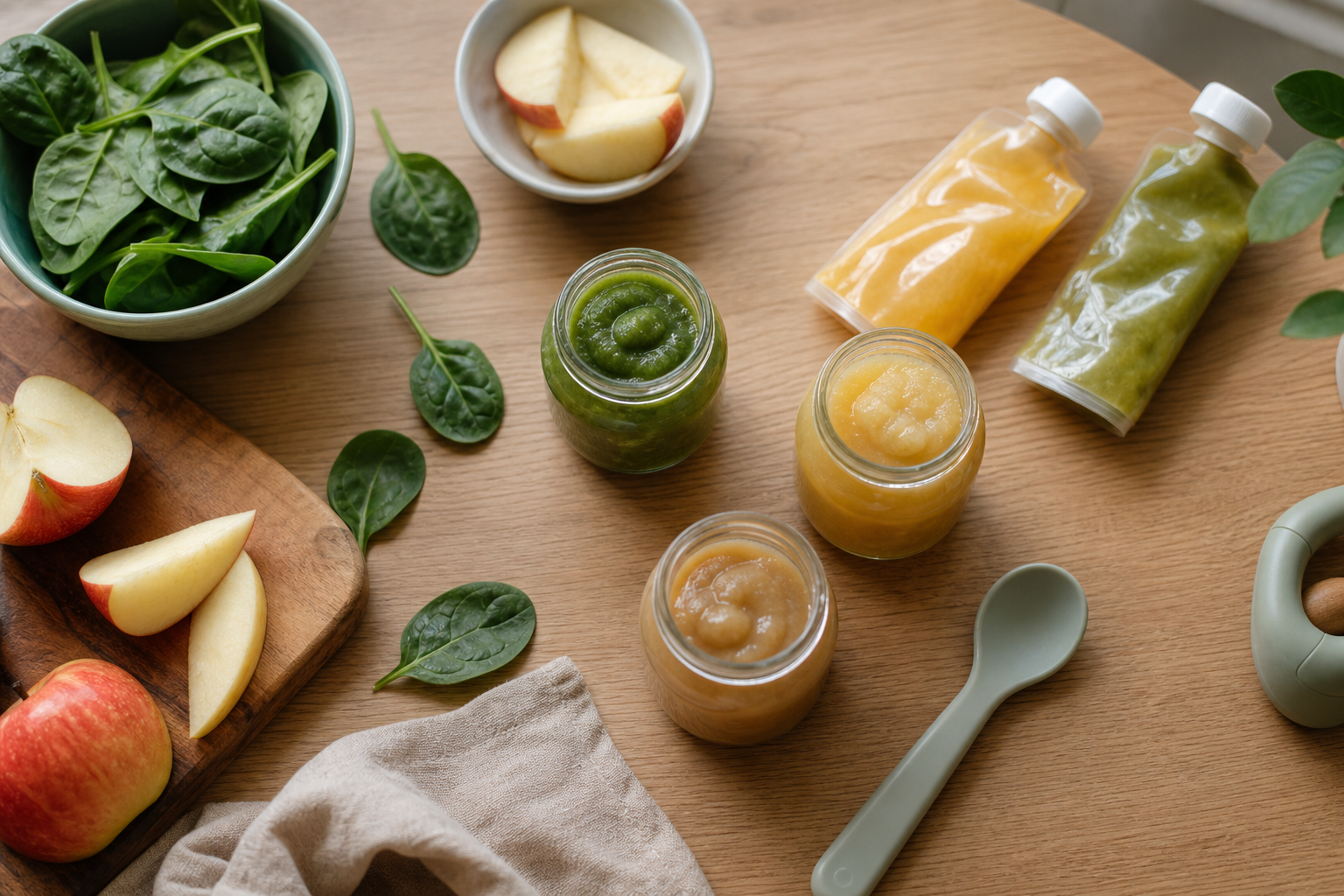
Standing in the baby food aisle with a fussy infant in the cart, the question is rarely abstract: is organic baby food worth the extra cost, or is that just a premium sticker for anxious parents? The honest answer depends on which specific food is in the jar, not on organic versus conventional as a blanket rule.
This article puts real prices next to real pesticide and heavy metal data so you can decide where the extra dollars actually buy something, and where they don't.
Is Organic Baby Food Worth the Extra Cost? Let's Start With the Price Gap
Organic baby food usually costs 25% to 75% more per ounce than conventional, depending on brand and format. That range is wide because store brands and name brands price their organic lines very differently.
The table below compares typical per-ounce pricing across common baby food brands (illustrative figures based on standard U.S. grocery and online retail pricing; actual shelf prices vary by region, retailer, and sales).
| Brand / Product | Format | Organic (per oz) | Conventional (per oz) | Price Difference |
|---|---|---|---|---|
| Gerber 2nd Foods | 4 oz jar | $0.30 | $0.22 | +36% |
| Beech-Nut Naturals | 4 oz jar | $0.32 | $0.25 | +28% |
| Earth's Best Organic vs. store brand | 4 oz jar | $0.35 | $0.20 | +75% |
| Happy Baby Organics | 4 oz pouch | $0.37 | $0.30 | +23% |
Scaled out, a 7-month-old eating three purees a day adds roughly $5 to $12 a week to the grocery bill if every jar is organic, or about $20 to $50 a month. That is a real number for a tight budget, but it's a manageable one, which is why the more useful question is not "organic or not" across the board, it's which specific foods the extra cost is buying you something for.
What Does 'Organic' Actually Guarantee, and What Does It Not Cover?
The USDA Organic seal guarantees no synthetic pesticides or fertilizers, no GMOs, and specific soil and feed standards, but it says nothing about heavy metal content. That last part surprises most parents, because heavy metals are the contaminant regulators have actually flagged as a documented concern in baby food.
A 2021 congressional investigation into major baby food manufacturers found measurable levels of arsenic, lead, or cadmium in most tested products, organic and conventional alike, because these metals come from soil and water, not from pesticide choice. Organic certification does not test for or restrict them.
The FDA's own Closer to Zero action plan was created specifically to address this gap, and it applies equally to organic and conventional products. If heavy metals are your main worry, organic labeling alone will not solve it; ingredient choice matters more (root vegetables and rice-based products tend to test higher than others).
Does Organic Produce Actually Have Fewer Pesticides Than Conventional?
Yes, organic produce carries fewer synthetic pesticide residues, but the gap matters less once that produce is cooked and pureed into baby food. Raw-produce comparisons, which most articles on this topic rely on, don't fully translate to what ends up in a jar.
The USDA's Pesticide Data Program has consistently found that residues on the large majority of tested samples, organic and conventional, fall well within EPA safety tolerances. Cooking, peeling, and blanching (all standard steps in commercial baby food production) reduce residue levels further, regardless of whether the produce started organic or conventional.
The strongest human evidence for a measurable difference comes from a 2006 exposure study in Environmental Health Perspectives, which switched children onto an organic diet for five days and found their urinary organophosphate pesticide metabolites dropped to near-undetectable levels, then rebounded once conventional food resumed. That's real evidence that organic food lowers a specific, measurable exposure. What it does not show, and what no study has shown, is a difference in actual health outcomes between children raised on organic versus conventional diets. The exposure gap is documented; the outcome gap is not.
Does Broccoli Need to Be Organic?
No, broccoli is one of the lowest-pesticide-residue vegetables sold, so buying it conventional is a reasonable place to save money. It regularly lands among the cleaner items in EWG's annual produce testing, alongside avocados, sweet corn, and onions.
The reason is structural, not just a lucky testing year. Broccoli grows in dense, tightly clustered florets covered by a waxy outer layer that sheds much of any applied residue during washing, and it has a relatively short growing cycle compared to leafy greens or thin-skinned fruit, meaning less cumulative pesticide contact over its life in the field.
The same logic (thick skin, short exposure window, or both) explains why avocado, banana, and sweet corn also routinely test low. If a baby food ingredient list includes broccoli, banana, or avocado puree, conventional is a low-stakes choice.
What Are the Worst Foods for Pesticides, and Do Any Show Up in Baby Food?
Strawberries, spinach, and apples consistently rank as the highest-pesticide-residue produce, and all three are common first-food ingredients. That overlap is exactly why the "organic doesn't matter much" advice needs a caveat for parents of infants specifically.
| High-Residue Produce | Common in Baby Food? | Recommendation |
|---|---|---|
| Strawberries | Yes, purees and pouches | Buy organic when possible |
| Spinach | Yes, green purees and blends | Buy organic when possible |
| Apples | Yes, applesauce is a top first food | Buy organic when possible |
| Pears | Yes, common early puree | Buy organic when budget allows |
| Sweet potatoes | Yes, staple first food | Conventional is generally fine |
| Green beans | Yes, common blend ingredient | Conventional is generally fine |
Notice that sweet potatoes and green beans, both baby-food staples, do not carry the same residue burden as strawberries, spinach, and apples. This is the actual, ingredient-specific answer to the "should I buy organic" question, rather than a blanket yes or no.
What Are the Disadvantages of Organic Baby Food?
The most obvious disadvantage of organic baby food is cost, but three others matter just as much in practice: no heavy metal advantage, shorter shelf life, and inconsistent availability.
Because organic certification doesn't test for arsenic, lead, or cadmium, paying more for the label buys no protection against the contaminant regulators are actually most concerned about right now. Organic jars and pouches also tend to use fewer synthetic preservatives, which can mean a shorter shelf life and more frequent, smaller grocery trips instead of stocking up.
Availability is a real constraint outside major metro areas: smaller grocery stores and rural areas often stock a narrower organic baby food selection, forcing either a longer drive or an online order with shipping costs that erase any savings from bulk buying. Finally, there is a psychological disadvantage worth naming honestly: organic labeling can create a false sense of complete safety, when the actual data shows both organic and conventional baby food carry some level of unavoidable heavy metal exposure from soil.
Is Making Your Own Organic Baby Food Cheaper Than Buying It?
Yes, batch-cooked homemade organic purees typically cost 60% to 80% less per serving than store-bought organic jars or pouches. This is the cost lever most articles on this topic skip entirely.
A concrete example: two pounds of organic carrots at roughly $1.99 a pound ($3.98 total), steamed and pureed, yields about ten 4-ounce servings, or roughly $0.40 per serving. Compare that to a 4-ounce jar of Beech-Nut Naturals organic carrots at about $0.32 per ounce, or $1.28 per 4-ounce serving. Batch cooking cuts the cost by roughly two-thirds while keeping the organic ingredient.
The trade-off is time, not money: a Sunday batch-cook session (peeling, steaming, blending, and freezing in ice cube trays or small containers) takes 45 to 60 minutes and covers most of a week's servings. For families who have the time but not the budget for premium store-bought organic, this is the highest-leverage option on the table.
What Do Parents Actually Say About Organic Baby Food? (The Reddit Consensus)
Most parent communities online land on a hybrid approach: organic for a short list of high-residue fruits, conventional for everything else, and homemade purees to stretch the organic budget further. This pattern shows up consistently across parenting forums and threads discussing organic baby food cost.
The recurring, practical trade-offs parents describe are fairly consistent: buy organic apples, pears, spinach, and strawberries because those are the items that show up on every high-residue list; buy conventional bananas, avocado, sweet potatoes, and squash because the residue difference is negligible and the price difference is not; and batch-cook the expensive organic items at home instead of paying the store-bought organic markup on every single jar. Several also point out, correctly, that skipping organic entirely to save money and choosing lower-mercury proteins and varied grains to reduce heavy metal exposure is a more evidence-backed use of a limited budget than buying organic across the board.
So, Is Organic Baby Food Worth the Extra Cost? The Verdict
For most families, organic baby food is worth the extra cost only for a specific short list of high-residue produce (strawberries, spinach, apples, pears), not as a blanket rule across every jar. Blanket organic spending isn't supported by either the pesticide data or the heavy metal data, since the latter affects organic and conventional products equally.
If budget is the deciding factor, spend the organic premium where it has evidence behind it, buy conventional on structurally low-residue foods like broccoli, banana, and sweet potato, and consider batch-cooking your own purees for the expensive high-residue items to capture organic ingredients without the store-bought markup. That combination, not an all-or-nothing choice, is what the actual data supports.
Frequently asked questions
Is organic baby food more expensive than conventional?
Yes, typically 25% to 75% more per ounce depending on the brand and format, based on typical U.S. grocery pricing. The gap is widest between premium organic brands and conventional store brands, and narrower between organic and conventional lines from the same manufacturer.
Does organic fruit have pesticides?
Yes, organic farming allows certain natural and approved pesticides, and organic produce can also pick up trace residue from neighboring conventional fields through drift or soil carryover. Organic means no synthetic pesticides were applied, not zero pesticide residue whatsoever.
Does broccoli need to be organic?
No. Broccoli consistently tests as one of the lower-pesticide-residue vegetables due to its dense floret structure, waxy surface, and short growing cycle. Conventional broccoli is a reasonable place to save money without meaningfully increasing pesticide exposure.
What are the disadvantages of organic baby food?
Higher cost, shorter shelf life due to fewer synthetic preservatives, less consistent availability outside major grocery chains, and no protection against heavy metals, since organic certification doesn't regulate arsenic, lead, or cadmium. It can also create a false sense that the product is entirely risk-free.
Is organic baby food worth the extra cost, according to parents online?
Most parenting communities land on a hybrid strategy: organic for high-residue fruits like strawberries and apples, conventional for low-residue items like banana and sweet potato, and homemade batch-cooked purees to stretch the organic budget further rather than buying every jar organic.
What is the worst pesticide-contaminated food commonly used in baby food?
Strawberries and spinach consistently rank among the highest-residue produce items and both appear frequently in baby purees and pouches. Apples, used heavily in applesauce, also rank high and are worth prioritizing for organic if budget allows.
Sources
- EWG Shopper's Guide to Pesticides in Produce (2024)
- USDA Pesticide Data Program (2023)
- Organic Diets Significantly Lower Children's Dietary Exposure to Organophosphorus Pesticides (2006)
- Baby Foods Are Tainted with Dangerous Levels of Arsenic, Lead, Cadmium, and Mercury (2021)
- FDA Closer to Zero Action Plan for Baby Foods (2023)