If you type "what's the healthiest thing to drink for energy" into a search bar at 2pm with your head on your desk, you don't want a biochemistry lecture. You want to know what to pour into a cup right now. The short version: a full glass of water, followed by a moderate, well-timed dose of caffeine, beats every commercial energy drink, sugary juice, and "natural" fix on the shelf.
But "energy" isn't one thing. Cognitive alertness, physical exercise output, and plain old motivation run on different physiology, which is why beet juice, green tea, and black coffee each shine in different situations and fail in others. This article breaks the question down by cause, dose, and timing, including the caffeine math that most healthy-living lists skip entirely.
What's Actually Causing Your Fatigue Right Now?
Not all fatigue has the same cause, and the drink that fixes one kind can do nothing for another. Before reaching for a stimulant, it helps to know which type of tired you're dealing with.
Dehydration fatigue shows up as a foggy head, a mild headache, and low motivation, often before you feel thirsty. Sleep debt fatigue feels heavier and doesn't lift much with caffeine, since coffee blocks tiredness signals without paying back the sleep you actually owe. Blood sugar dip fatigue tends to hit two to three hours after a high-carb meal and comes with shakiness or irritability. Caffeine withdrawal fatigue, common in daily coffee drinkers, shows up as a dull headache and brain fog roughly 12 to 24 hours after your last cup, and it's easy to mistake for "just being tired" instead of a rebound effect.
Matching the drink to the cause matters more than finding the single "best" drink on a list.
What's the Healthiest Drink for Energy?
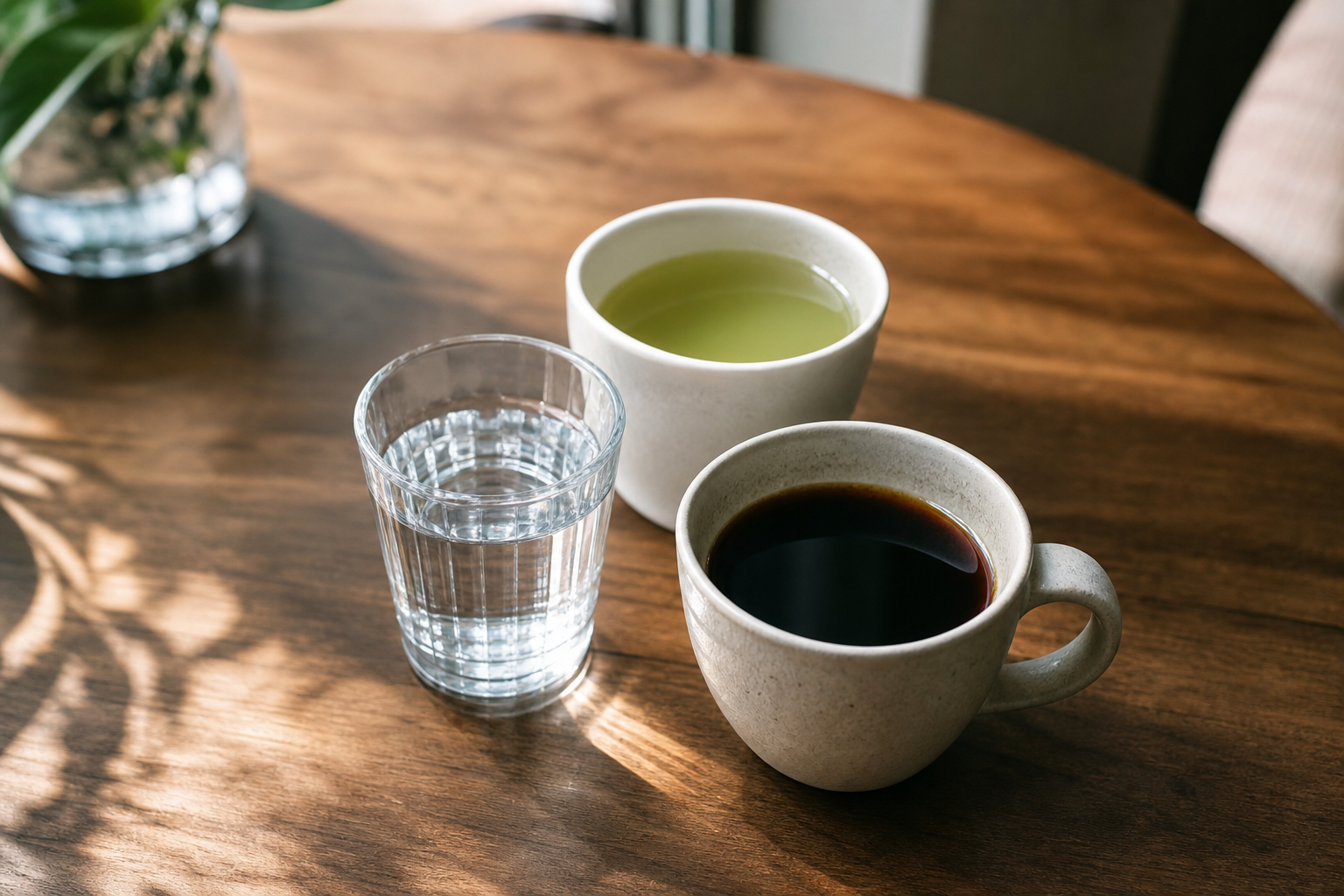
For most healthy adults, the healthiest drink for energy is plain water, followed by a moderate dose of caffeine, the stimulant found in coffee and tea, in the range of 200 to 300 milligrams. Good sources include black coffee, green tea, or matcha, a powdered whole-leaf green tea that carries both caffeine and L-theanine, an amino acid that takes the edge off jitteriness.
Water comes first because even mild fluid loss measurably reduces alertness before you feel thirsty. Once you're hydrated, the caffeine source is mostly personal preference: coffee acts faster and stronger per cup, green tea and matcha act more gradually and smoother. No commercial energy drink beats this simple combination, since most pack far more caffeine and added sugar than a cup of coffee or tea, without added benefit past the point covered in the next section.
How Much Caffeine Actually Helps, and When Does It Stop?
Caffeine's benefit to alertness and reaction time rises quickly up to about 200 to 300 milligrams for most adults, then flattens out while jitteriness, anxiety, and sleep disruption keep climbing. Past that point, you're not getting more alert, you're just getting more wired.
The FDA's general guidance puts 400 milligrams a day as the ceiling for healthy adults, and a detailed EFSA safety review found single doses above 200mg start raising the risk of anxiety and sleep problems in caffeine-sensitive people. The table below shows where the payoff curve bends.
| Caffeine dose | Typical effect |
|---|---|
| 0-100mg (about 1 espresso shot) | Mild bump in alertness, minimal side effects |
| 100-200mg (1 strong coffee) | Noticeable improvement in focus and reaction time |
| 200-300mg (2 coffees or matcha equivalents) | Benefits plateau here for most adults; the practical sweet spot |
| 300-400mg | Little added benefit, rising jitteriness and anxiety risk |
| 400mg+ | FDA/EFSA ceiling; higher risk of palpitations and disrupted sleep |
What's the Best Morning Drink for Energy, and Does Timing Matter?
Yes, timing changes how much a caffeinated drink actually helps. Waiting roughly 90 to 120 minutes after waking, once your body's natural cortisol surge has already peaked, tends to work better than reaching for caffeine the moment you open your eyes.
Cortisol is the hormone largely responsible for waking you up, and it naturally spikes in the first 30 to 45 minutes after you get out of bed, a pattern researchers call the cortisol awakening response. Drinking coffee right into that spike adds a stimulant on top of a hormone that's already doing the job, which is part of why the first cup sometimes feels like it barely works. No controlled trial has directly tested the exact 90 to 120 minute window, so treat it as a reasonable, low-risk habit rather than a guaranteed fix.
Either way, drink water before your first coffee. Seven to eight hours asleep without fluids is effectively an overnight mini-fast, and a glass of water addresses that before caffeine has to work harder than it needs to.
What to Drink to Boost Energy Naturally: Green Tea, Matcha, and Beet Juice
Green tea gets credit for "smoother" energy because it pairs caffeine with L-theanine, but the ratio matters more than most lists admit. The most cited research on the combination, an Owen et al. study, used roughly a 2:1 ratio of L-theanine to caffeine (about 97mg L-theanine to 40mg caffeine) to produce better sustained attention with less jitteriness than caffeine alone.
A typical steeped cup of green tea doesn't reliably hit that ratio, since it usually delivers only 8 to 20mg of L-theanine alongside 30 to 50mg of caffeine. Matcha, made from whole ground tea leaves rather than steeped and discarded leaves, generally carries more L-theanine per cup and gets closer to the studied ratio, which is part of why it's often described as calmer than plain green tea.
Beet juice works through a different mechanism entirely: dietary nitrates convert to nitric oxide in the body, widening blood vessels and improving oxygen efficiency during exercise, according to a review of nitrate supplementation research. That makes it genuinely useful before a workout or a run, but it does nothing for the kind of grogginess you feel at a desk at 3pm. Treat it as a performance drink, not a general energy fix.
Which Drink Is Best for Tiredness: Dehydration or Exhaustion?
If your tiredness traces back to dehydration, water or an unsweetened electrolyte drink outperforms caffeine. If it traces back to sleep debt, no drink actually fixes it, caffeine just delays the crash and can make the next night's sleep worse.
Studies on mild dehydration in men and a matching study in healthy young women both found that a fluid loss of just 1 to 2 percent of body weight measurably worsened mood, concentration, and perceived fatigue, well before someone would describe themselves as thirsty. For a 70kg (154 lb) adult, that's only 0.7 to 1.4kg (1.5 to 3 lbs) of sweat loss, easily reached during a moderate 45 to 60 minute workout or a hot day with too few water breaks.
Practical rule: if you've been sweating, sitting in heat, or skipping water for hours, reach for fluids before caffeine. If you slept five hours last night, no amount of coffee replaces the missing sleep, it only masks the deficit for a few hours.
How Do I Boost My Energy Quickly?
The fastest reliable combination is a large glass of water, five to ten minutes of movement, and caffeine only if you still need it afterward.
Step one: drink about 500ml (17oz) of water, since mild dehydration is a common and fixable cause of the afternoon slump. Step two: take a brisk walk or climb a few flights of stairs, which increases blood flow and alertness without any stimulant. Step three: if it's been more than three hours since you ate, have a small snack that pairs protein with a complex carbohydrate, like Greek yogurt with fruit, to prevent a blood sugar dip from adding to the fatigue. Step four: if you're still tired after that, have a caffeinated drink dosed within the 200 to 300mg range discussed earlier, accounting for anything you've already had that day.
How Fast Does Caffeine Actually Add Up?
Caffeine adds up faster than most labels suggest. A single day of one energy drink, two coffees, and an afternoon tea can put you within striking distance of the 400 milligram ceiling before dinner even starts.
| Drink | Typical caffeine |
|---|---|
| Energy drink, 8oz can | ~80mg |
| Coffee, 8oz cup (first) | ~95mg |
| Coffee, 8oz cup (second) | ~95mg |
| Black or green tea, 8oz | ~40-50mg |
| Running total | ~310-320mg |
That leaves little room for chocolate, cola, or a pre-workout supplement layered on top. Caffeine's half-life, the time it takes the body to clear half of a dose, runs about five to six hours, so a 3pm cup can still be a quarter to half as strong in your system at 9pm, quietly undercutting the sleep that would have fixed tomorrow's fatigue for free.
When Is Fatigue a Medical Issue, Not a Drink Problem?
If fatigue persists despite good hydration, seven to nine hours of sleep, and a moderate caffeine routine, it may point to something a drink can't fix. Anemia, thyroid dysfunction, and sleep apnea are the three most common medical causes hiding behind "I'm just always tired."
Watch for pale skin, cold hands, or shortness of breath on mild exertion, which can suggest low iron or anemia and warrants a ferritin blood test. Unexplained weight change, feeling cold all the time, or dry skin can point to a thyroid issue, checked with a TSH test. Loud snoring, gasping during sleep, or waking unrefreshed after a full night can signal sleep apnea, which needs a sleep study, not another cup of coffee. If tiredness lasts more than two weeks despite solid basics, it's worth a doctor's visit rather than another energy drink.
Top 10 Healthiest Energy Drinks, Ranked by What They Actually Do
Ranking healthiest energy drinks only makes sense when you know what job each one is doing, since the top pick for hydration isn't the top pick for a workout or a 3pm slump.
| Rank | Drink | Best for | Watch out for |
|---|---|---|---|
| 1 | Water | Baseline hydration, most fatigue types | Nothing, but often skipped |
| 2 | Green tea | Smoother alertness with some L-theanine | Can still cause jitters in sensitive people |
| 3 | Matcha | Stronger L-theanine to caffeine ratio than steeped tea | More caffeine per gram than typical green tea |
| 4 | Black coffee, no sugar | Fast, strong alertness | Counts fully toward the 400mg daily ceiling |
| 5 | Yerba mate | Caffeine plus antioxidants, coffee alternative | Caffeine content varies widely by brand |
| 6 | Beet juice | Exercise endurance and output | Not a fix for cognitive or morning fatigue |
| 7 | Electrolyte water, unsweetened | Rehydration after heavy sweating | Unnecessary for normal daily hydration |
| 8 | Oolong tea | Moderate caffeine, in between coffee and green tea | Caffeine varies by steep time and leaf type |
| 9 | Ginger or peppermint tea, caffeine-free | Non-caffeine pick-me-up via digestion and circulation | Minimal direct energy effect |
| 10 | Small fruit and vegetable smoothie with protein | Blood sugar stabilizing snack-drink hybrid | Easy to oversweeten with juice-heavy recipes |
Frequently asked questions
What's the healthiest thing to drink for energy, based on what actually works?
Across clinical guidance and real-world use, a glass of water followed by a moderate 200-300mg dose of caffeine from coffee, green tea, or matcha is the most consistent answer. It beats commercial energy drinks mainly because it avoids the added sugar and excess caffeine those products carry.
How do I boost my energy quickly without relying on caffeine?
Drink about 500ml of water, take a brisk five to ten minute walk, and eat a small protein-plus-carb snack if it's been a few hours since your last meal. This combination addresses the three most common non-medical causes of quick fatigue: dehydration, low blood flow, and a blood sugar dip.
Which drink is best for tiredness caused by lack of sleep?
No drink fully fixes sleep debt. Caffeine can mask the tiredness for a few hours, but it doesn't restore the cognitive function that missed sleep costs you, and using it late in the day can make the next night's sleep worse.
Can you drink too much green tea?
Yes, cumulative caffeine still applies. Four to five cups of green tea can add 150 to 250mg of caffeine over a day, which combined with any coffee, soda, or chocolate can push you close to or past the 400mg daily ceiling.
How do I reset my caffeine tolerance if coffee stopped working?
Taper gradually over seven to ten days by cutting your total daily caffeine by about 25 percent every two to three days, rather than stopping cold. Expect a withdrawal headache and brain fog to peak around day one or two before easing, and once sensitivity returns, a smaller dose will feel noticeably stronger.
Sources
- Spilling the Beans: How Much Caffeine is Too Much (2022)
- Scientific Opinion on the safety of caffeine, EFSA Journal (2015)
- The combined effects of L-theanine and caffeine on cognitive performance and mood (2008)
- The cortisol awakening response: more than a measure of HPA axis function (2010)
- Mild dehydration impairs cognitive performance and mood of men (2011)
- Mild dehydration affects mood in healthy young women (2012)
- Dietary nitrate supplementation and exercise performance (2014)