
Most guides list eight lower ab exercises and call it done. This one ranks them by measured muscle activation, using EMG data to show which moves actually recruit the lower rectus abdominis hardest, and where popular picks like mountain climbers and dead bugs actually land on that scale.
You'll also get gym machine options most bodyweight-only lists skip, a specific training frequency and progression plan, and a clear answer on whether men and women need different approaches to the same muscle. What you won't find here is a promise that any single move melts lower belly fat on its own, because that isn't how fat loss works.
Which Lower Ab Exercises Actually Work Best?
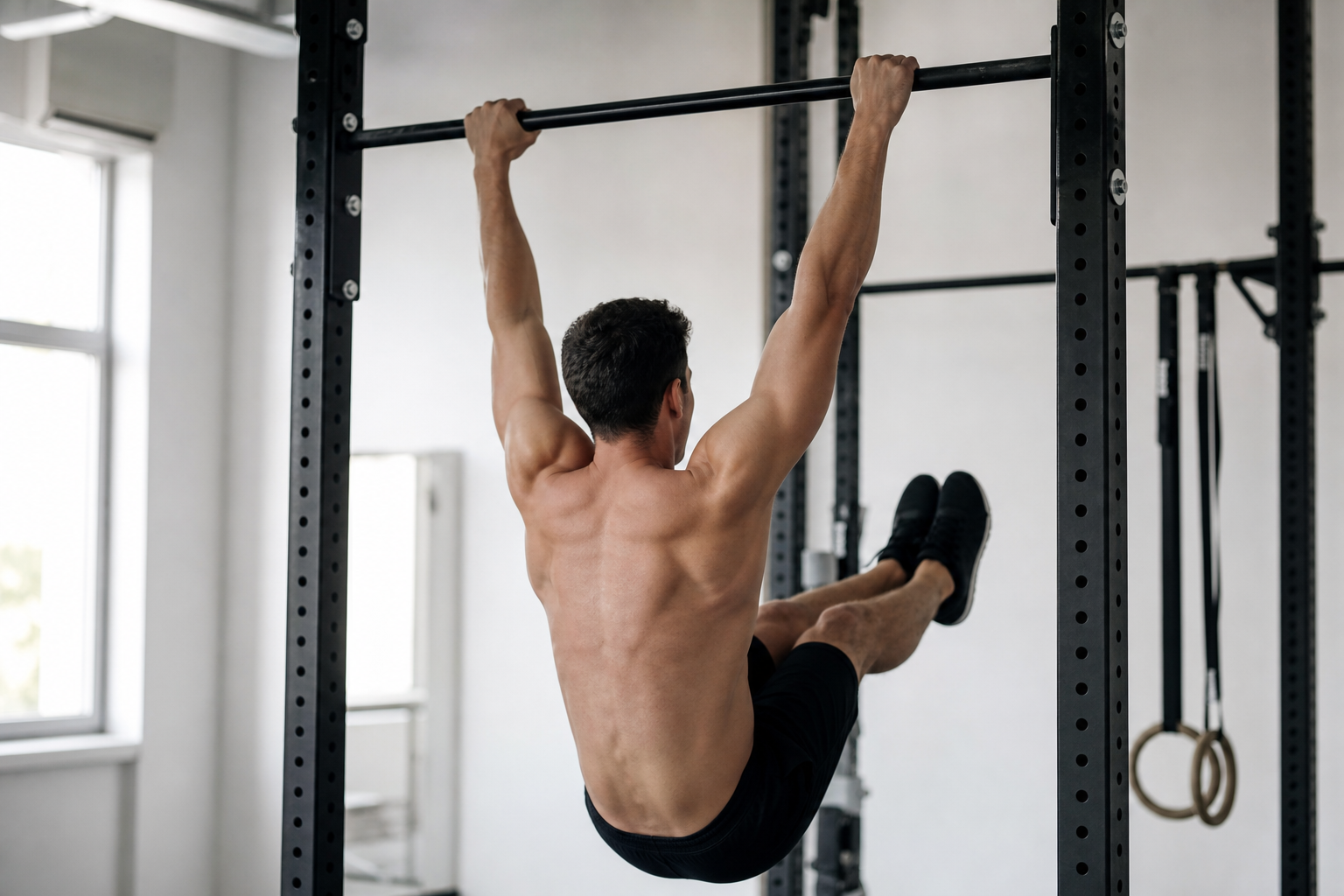
Captain's chair leg raises and hanging leg raises produce the highest measured activation in the lower fibers of the rectus abdominis, according to EMG (electromyography) testing, while mountain climbers and dead bugs rank lower for pure lower-ab recruitment despite being popular in exercise lists. The most cited comparison remains the ACE-sponsored study conducted with the Biomechanics Lab at San Diego State University, which wired electrodes to the rectus abdominis and obliques of test subjects performing 13 common ab exercises. The bicycle crunch topped their overall rectus abdominis activation chart, but exercises built around hip flexion, like the captain's chair, showed a stronger bias toward the lower portion of the muscle because lifting the legs against gravity recruits the lower fibers more heavily than a spinal-flexion movement like a standard crunch.
Can You Tighten a Lower Belly Pooch With Exercise?
No, spot reduction is not possible: exercise cannot selectively burn fat from the lower belly, and a visibly tighter lower ab area comes from lowering overall body fat, not from doing more reps of any single move.
The clearest evidence comes from a 2007 University of Connecticut trial that had subjects train only one arm for 12 weeks, then measured subcutaneous fat in the trained versus untrained limb. Fat loss occurred systemically, not preferentially over the worked muscle, which undercuts the entire premise of targeted belly-fat exercises. A separate 2013 trial in the Journal of Strength and Conditioning Research had participants perform high-volume abdominal training for weeks and found no significant reduction in abdominal fat thickness compared to controls, despite measurable strength gains.
What actually shows up as a flatter lower belly is a sustained caloric deficit, typically 300 to 500 calories per day below maintenance, combined with enough protein and resistance training to preserve muscle while fat drops. Because the lower abdominal region tends to hold fat later and release it later than areas like the face or arms, most people need their total body fat percentage down to roughly 15 to 17% (men) or 22 to 25% (women) before lower ab definition becomes visible, according to ACE body fat percentage guidelines.
Realistically, this is a weeks-to-months process, not a weeks-to-days one. Losing fat at a safe rate of about 0.5 to 1% of body weight per week means most people training and dieting consistently need 3 to 6 months to see meaningful change in the lower ab area, longer if starting body fat is higher.
Lower Ab Exercises for Men vs. Women: Does It Matter?
No, the exercises themselves do not need to differ by sex, since men and women share the same rectus abdominis anatomy and respond to the same activation patterns from moves like hanging leg raises or captain's chair work.
What does differ is fat distribution. Estrogen tends to promote fat storage in the lower abdomen, hips, and thighs, while testosterone favors visceral and upper-abdominal storage, which is part of why lower belly fat can feel stubborn for many women regardless of training. This is a fat-distribution difference, not a muscle or exercise difference.
Postpartum women should also be more cautious with heavy loaded flexion movements like weighted V-ups or hanging leg raises in the first several months after delivery, since abdominal wall integrity can still be recovering. A brief check with a physical therapist before resuming intense lower ab training is a reasonable precaution.
Best Lower Ab Exercises for Machines at the Gym
Bodyweight moves cap out fast because gravity only provides so much resistance once your legs are strong enough to hoist themselves. Machines and cable stations solve that ceiling by letting you add external load in small, controlled increments, which is exactly what a muscle needs to keep adapting past the beginner stage.
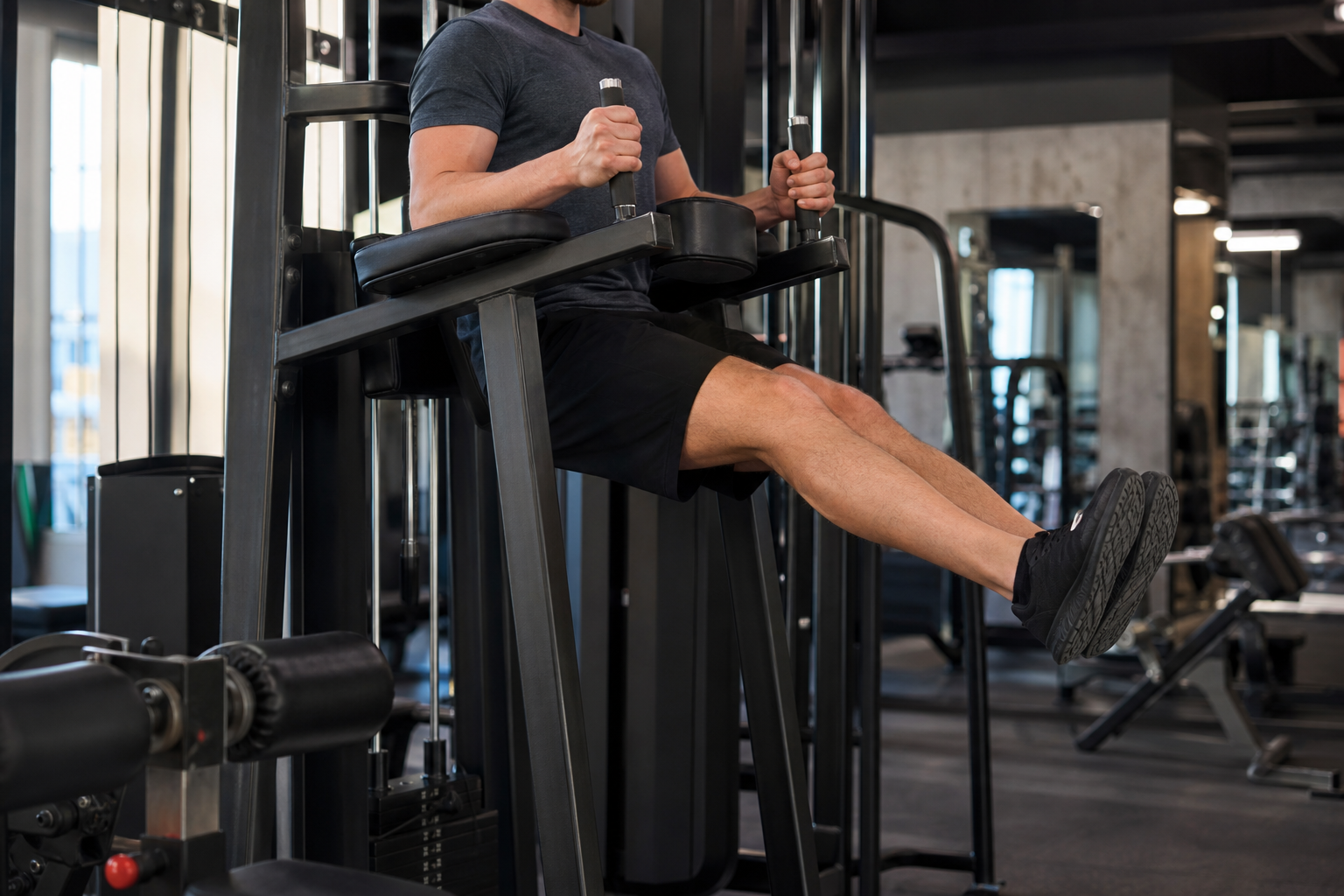
The captain's chair (vertical leg raise station) is the standout option here. You brace your forearms on the padded rests, let your legs hang free, and raise your knees toward your chest while keeping your lower back pressed against the pad. The ACE-sponsored EMG study that ranked ab exercises found this movement pattern near the top of the list, and the fixed torso position removes the swinging momentum that creeps into hanging leg raises.
A cable reverse crunch attaches an ankle strap to a low pulley: lying on a bench with your head toward the machine, you curl your hips up against resistance instead of just bodyweight, which lets you load the exact rep range you're training for. The decline bench sit-up station angles your hips above your shoulders, increasing the resistance arm on the lower fibers compared to a flat-floor sit-up. Standard ab crunch machines use a lever arm and weight stack, useful mainly as a beginner-friendly entry point before progressing to free-hanging work.
A practical gym superset: three rounds of captain's chair leg raises to near failure, immediately followed by cable reverse crunches for 12 to 15 controlled reps, resting 60 to 90 seconds between rounds.
How to Program Sets, Reps, and Recovery for Lower Abs
Train lower ab movements 2 to 3 times per week, not daily. The rectus abdominis contracts isometrically during squats, deadlifts, overhead presses, and even walking, so it's already accumulating fatigue on days you don't touch a single ab exercise.
Give it roughly 48 hours between dedicated sessions. That window matches the recovery timeline of most other skeletal muscle after a moderate-to-hard training bout, and stacking ab work on consecutive days on top of a heavy lower body or overhead pressing session tends to blunt recovery rather than speed progress.
Progress load, not just reps. Once bodyweight leg raises, reverse crunches, or cable variations move past 15 to 20 clean repetitions per set, add resistance rather than chasing higher rep counts: a light dumbbell between the feet for leg raises, an added ankle strap on the cable stack, or extra plates on a decline sit-up station. This keeps the muscle working in a productive rep range instead of drifting into pure muscular endurance territory.
Frequently asked questions
Can lower ab exercises fix lower back pain?
Not directly. A stronger rectus abdominis and transverse abdominis can reduce the load your lower back absorbs during daily movement and heavy lifts, but exercise doesn't correct pain coming from a disc issue, poor hip mobility, or muscle imbalance elsewhere. If pain is persistent or sharp rather than a dull ache after activity, see a physical therapist before adding more ab work.
Are lower abs harder to grow than upper abs?
They're not a separate muscle, so 'harder to grow' isn't quite the right frame, but the lower fibers of the rectus abdominis often lag because most daily movement and typical ab routines (crunches, sit-ups) load the upper fibers near the rib cage more. Leg-raise style movements shift more of the work to the lower fibers, which is why EMG rankings favor them for anyone trying to catch that region up.
Why do I feel lower ab exercises in my hip flexors instead of my abs?
The hip flexors, particularly the psoas and rectus femoris, assist in almost every leg-raise pattern and tend to take over once the abs fatigue or once your lower back arches off the floor or bench. Slowing the movement, stopping the range before your back arches, and pressing your lower back down throughout the rep shifts more of the tension back onto the abdominal fibers.
Do lower ab exercises help with postpartum diastasis recti?
No, standard leg raises, crunches, and V-ups can worsen diastasis recti if you see the abdomen bulge or tent along the midline during the movement. Postpartum training should start with gentle transverse abdominis activation and breathing work, ideally guided by a pelvic floor physical therapist, before reintroducing any of the exercises ranked in this article.
What's the difference between upper ab and lower ab workouts?
There's no separate muscle, since the rectus abdominis runs as one continuous sheet from the rib cage to the pelvis, divided visually by tendinous bands rather than by function. 'Upper' and 'lower' ab workouts just shift which end of that sheet carries more relative load: crunches and sit-ups bias the fibers near the ribs, while leg raises and reverse crunches bias the fibers near the pelvis.
Sources
- Subcutaneous fat alterations resulting from an upper-body resistance training program (Kostek et al., 2007) (2007)
- Regional fat changes induced by localized muscle endurance resistance training (Ramirez-Campillo et al., 2013) (2013)
- ACE: Guidelines for Percentage of Body Fat Loss (2023)
- ACE Study Reveals Best and Worst Abdominal Exercises (The Truth About Abs) (2001)